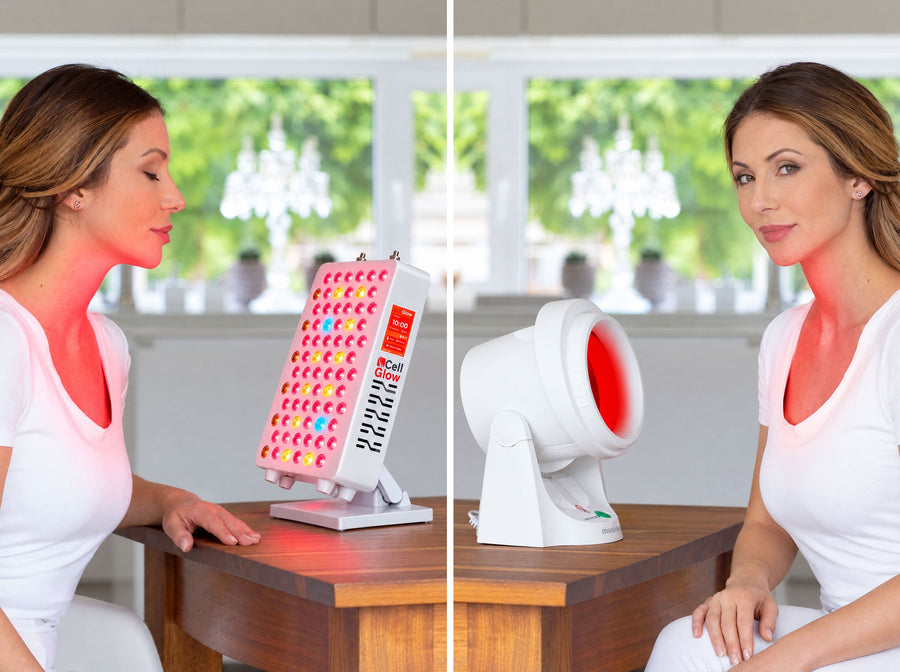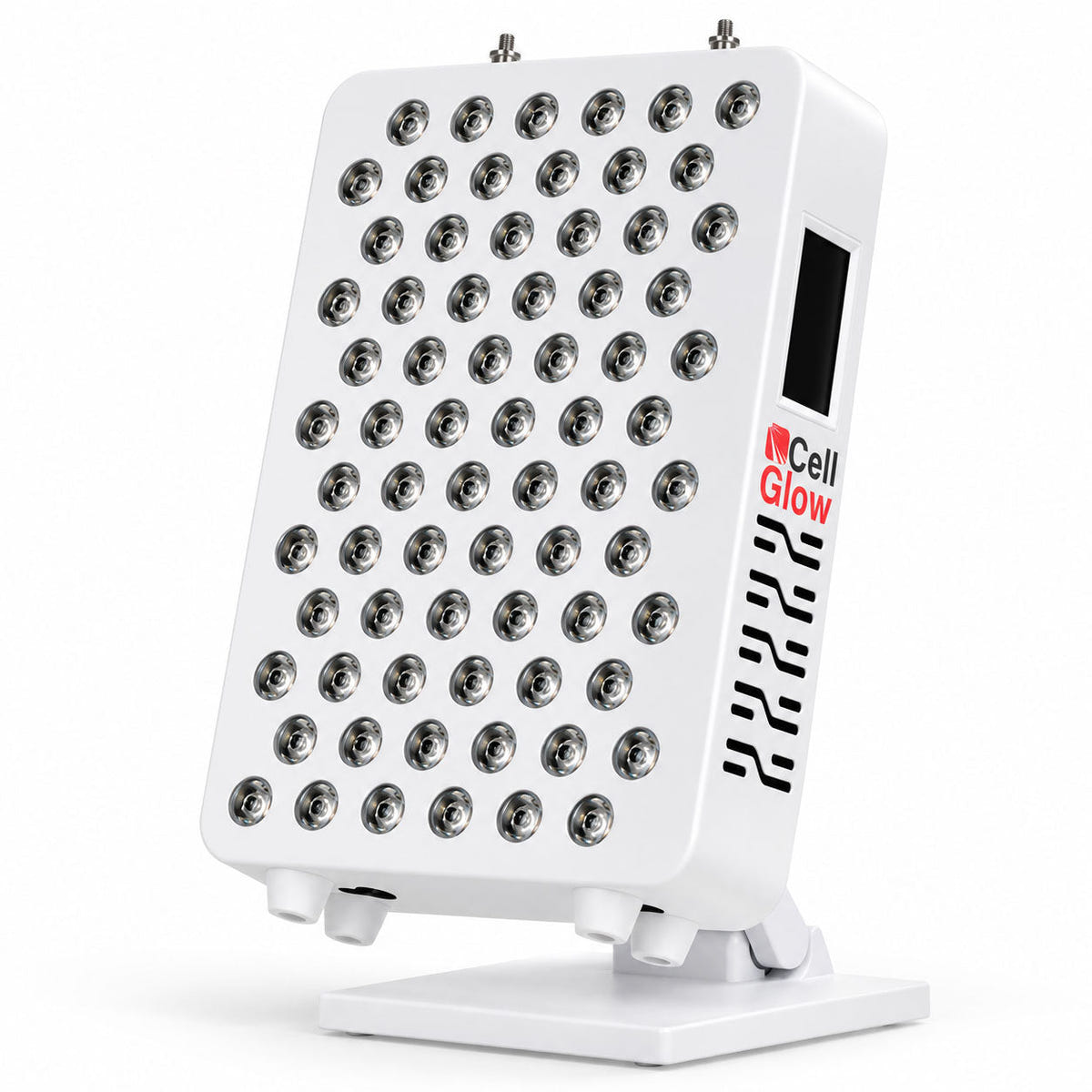
Cell Glow recommends: Use RLT on uncovered skin if you want a predictable light exposure. A jumper, shirt or towel blocks part of the light; a more powerful Cell Glow panel does not make the dose under clothing known. Uncover the area and follow the distance in the manual.
Why does fabric make a difference?
A measurement on the front of a panel tells nothing about what remains under a shirt. Tightly woven and dark materials can block more light than thin or light fabrics. Near infrared is invisible, but that doesn't mean it passes through clothing unhindered. Even on exposed skin, the dose increases or decreases with distance and angle.
How do you use it practically?
Follow the recommended distance from the manual and expose the intended skin area within what is comfortable and appropriate. Place the panel stably and allow sufficient ventilation all around. Do not extend the session based on a guess as to how much light will pass through textiles.
Can I test a specific garment?
Only an appropriate optical measurement at the relevant wavelength can indicate the transmittance of that material. An ordinary photo or the visible brightness says little about near infrared. If in doubt, avoid skin contact and expose immediately according to the manual.
Read also
Sources and review
Content reviewed on 8 October 2026. The devices and protocols studied are not necessarily identical to Cell Glow products. This article is not a substitute for individual medical advice.