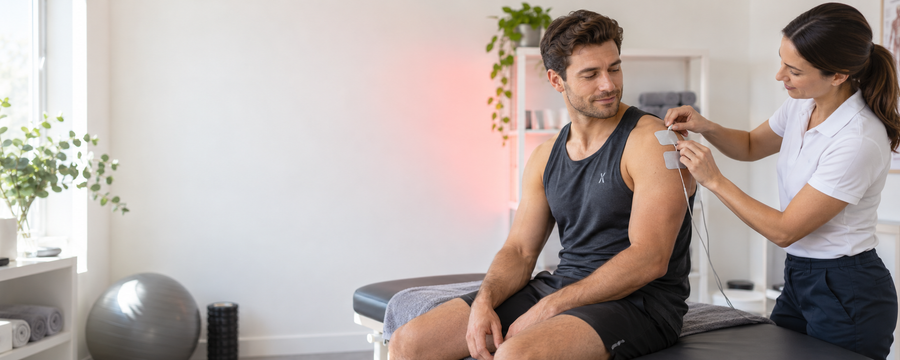
In sport and physiotherapy, photobiomodulation is studied as an addition to training and recovery. Light does not replace sleep, sensible training loads or injury care. Researchers measure muscle endurance, post-exercise strength and markers of muscle damage.
What do studies show?
A 2024 meta-analysis pooled randomized trials applying light before exercise. On average, it found favorable effects on some measures of endurance and recovery, but results differed by participant and protocol. Not every trial found a benefit. Another systematic review discusses photobiomodulation for musculoskeletal complaints in athletes; interpretation depends on the injury and treatment tested.
Questions for practical use
Look beyond wavelength: dose, muscle group, timing before or after exercise and distance from the light source all matter. A small local device and a large panel do not automatically deliver the same exposure. Injury care should start with a professional treatment plan. Read how red light therapy works and our overview of uses.
Scientific sources
- Li et al. (2024): meta-analysis of randomized trials on pre-exercise light, muscle endurance and recovery.
- Systematic review (2024) of photobiomodulation for musculoskeletal complaints in athletes.
These studies use varied devices and protocols. They do not automatically prove an effect from a specific Cell Glow panel.