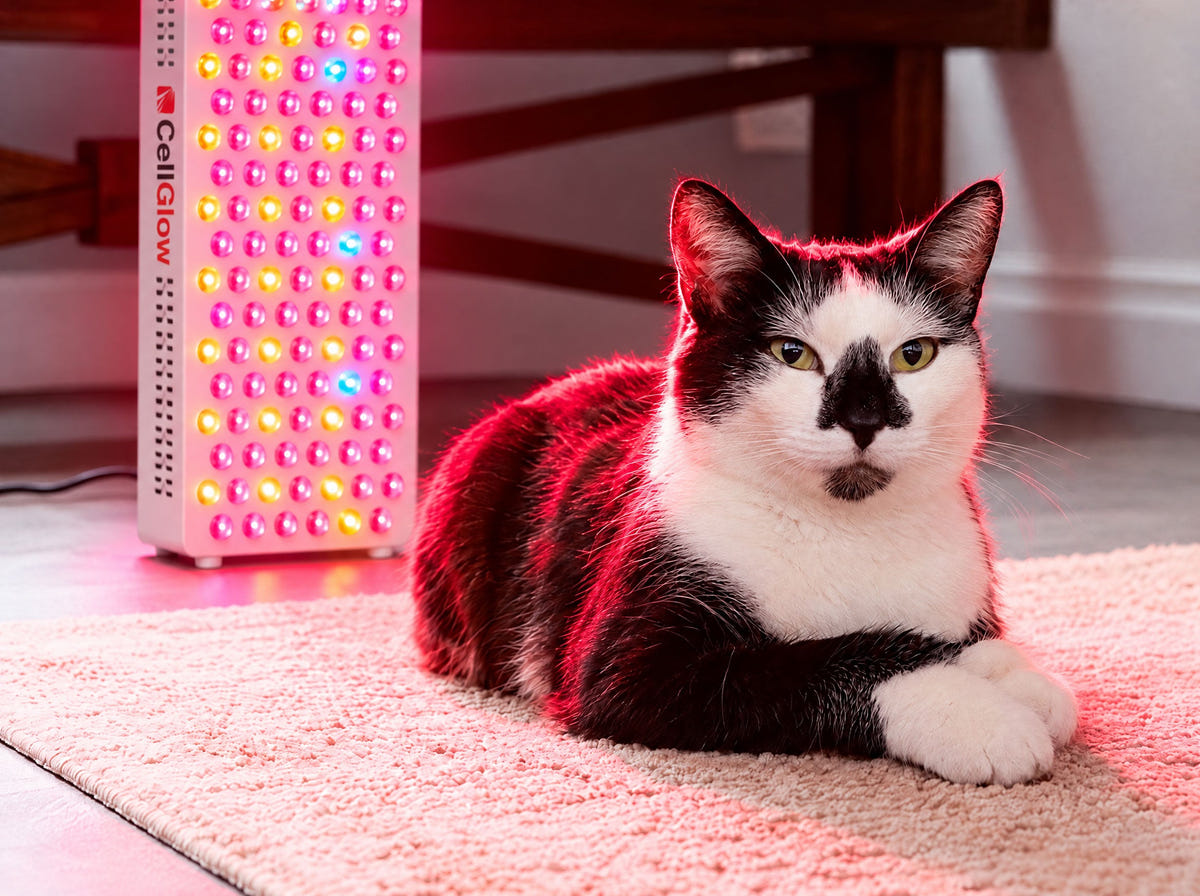
Cell Glow recommends: Do not use a human Cell Glow panel on a pet without consulting a veterinarian. Light therapy is studied in veterinary care too, but dose, the animal's behaviour and eye safety need their own assessment.
What has been studied?
A systematic review of 45 veterinary studies found varying outcomes and a moderate to high risk of bias. Many studies involved dogs and used clinical lasers with different settings than consumer panels. A separate study in dogs with hip osteoarthritis also does not say what a random panel does in a cat.
Why is caution necessary?
An animal cannot explain whether light is unpleasant and can move suddenly. Eyes, fur, skin and sense of warmth require attention. Pain, lameness or a wound often have an underlying cause that must first be treated. A panel at a short distance without supervision is not a responsible experiment.
How do you discuss it?
Take device data with you to the vet: wavelength, power, distance, session duration and safety instructions. Only use a protocol that the vet considers appropriate and stop as soon as the animal shows stress or discomfort.
Read also
Sources and review
Content reviewed on 8 October 2026. The devices and protocols studied are not necessarily identical to Cell Glow products. This article is not a substitute for individual medical advice.