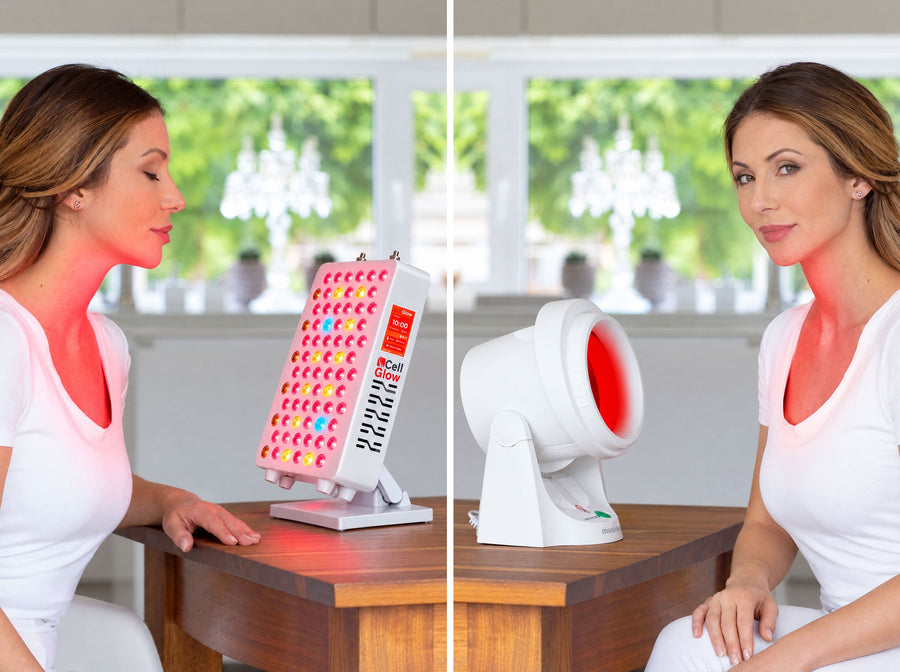
Cell Glow recommends: RLT can be used across different skin types, but pigment-sensitive skin calls for a thoughtful start. Choose adjustable output at Cell Glow and begin according to the manual; ask a dermatologist first if you have melasma or a photosensitive condition.
What does dermatology say?
The American Academy of Dermatology points out that people with darker skin may be more sensitive to visible light and therefore have a greater risk of hyperpigmentation. This does not mean that red light is by definition unsuitable, but it does mean that 'safe for everyone' is too broad. Many studies also include limited variation in skin types.
How do you start gently?
Choose a device with clear instructions, use no more than recommended, and monitor changes in pigment or irritation. If you have melasma, lupus, photosensitizing medication or an active skin condition, first discuss use with a dermatologist. In addition, protect the skin against sunlight according to regular skin advice.
What can you measure?
Take photos under the same lighting and compare not only general shine, but also any new spots or redness. Stop if you have an unwanted reaction. A personal skin assessment is more useful than an online before-and-after photo of a different skin type.
Read also
Sources and review
Content reviewed on 8 October 2026. The devices and protocols studied are not necessarily identical to Cell Glow products. This article is not a substitute for individual medical advice.