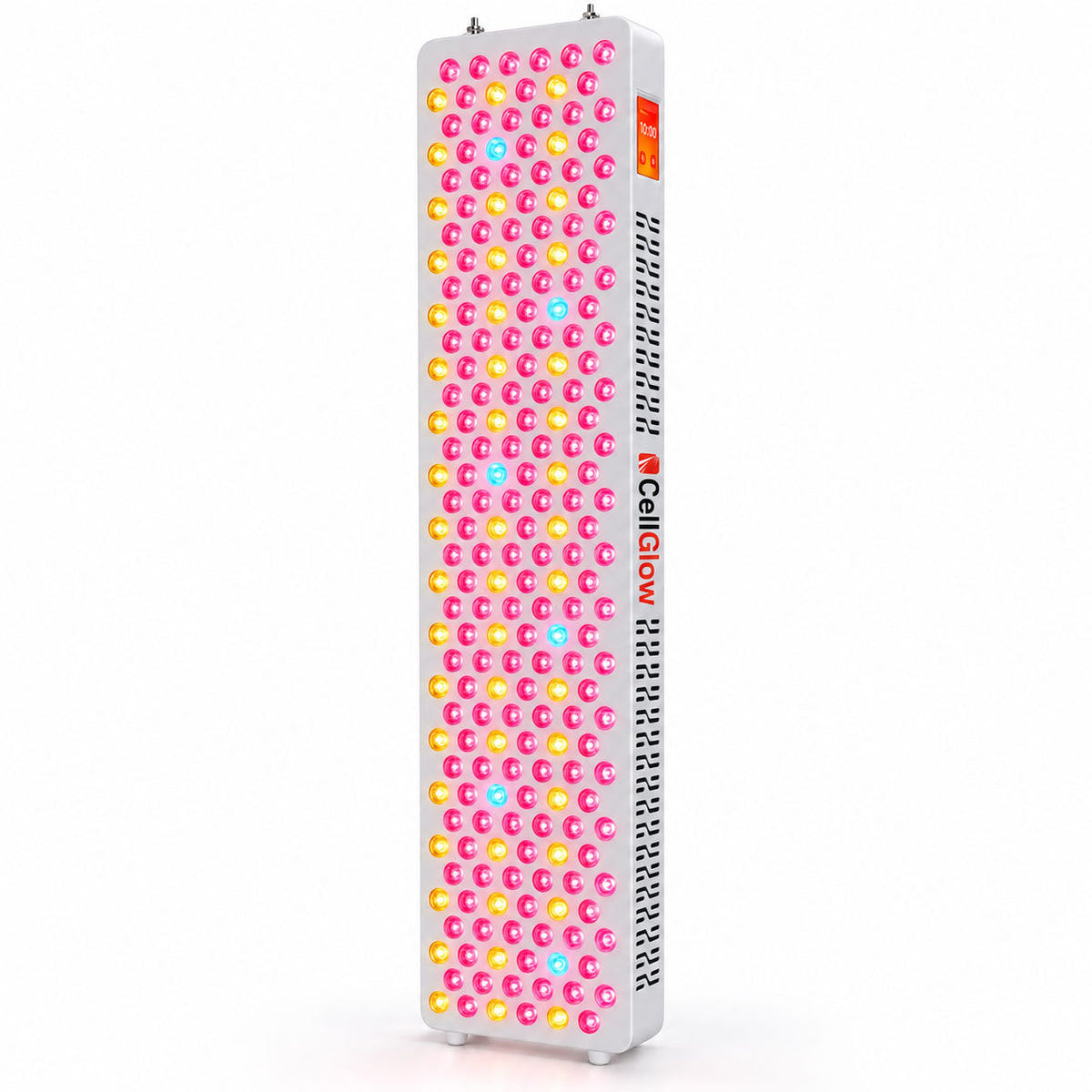
Cell Glow recommends: Studies report positive results for selected function measures in knee osteoarthritis; that conclusion cannot simply be transferred to hip complaints. Choose a Cell Glow panel for a broader RLT routine, but establish the cause of hip or joint pain first.
Why is the hip not the same as the knee?
The hip is deeper and the cause of pain can come from the joint, tendons, muscles or the back. A review in knee osteoarthritis found a small average benefit for pain at rest, while other functional outcomes were less clear. Researchers recommended photobiomodulation at most as a supplement, not as a sole treatment. Transferring that result directly to the hip would be incorrect.
Which steps are more important?
Have recurring hip complaints assessed, especially if walking, sleeping or daily movement is limited. Depending on the cause, exercise therapy, load adjustment and other care may be better substantiated. A light session can be a chosen addition, provided expectations remain modest and the instructions for use are followed.
What do you ask for a device?
Check the surface it illuminates, the distance and the measurement data for that distance. A wavelength in itself does not say how much light reaches the joint. Keep track of whether pain, mobility or function in particular changes.
Read also
Sources and review
Content reviewed on 8 October 2026. The devices and protocols studied are not necessarily identical to Cell Glow products. This article is not a substitute for individual medical advice.