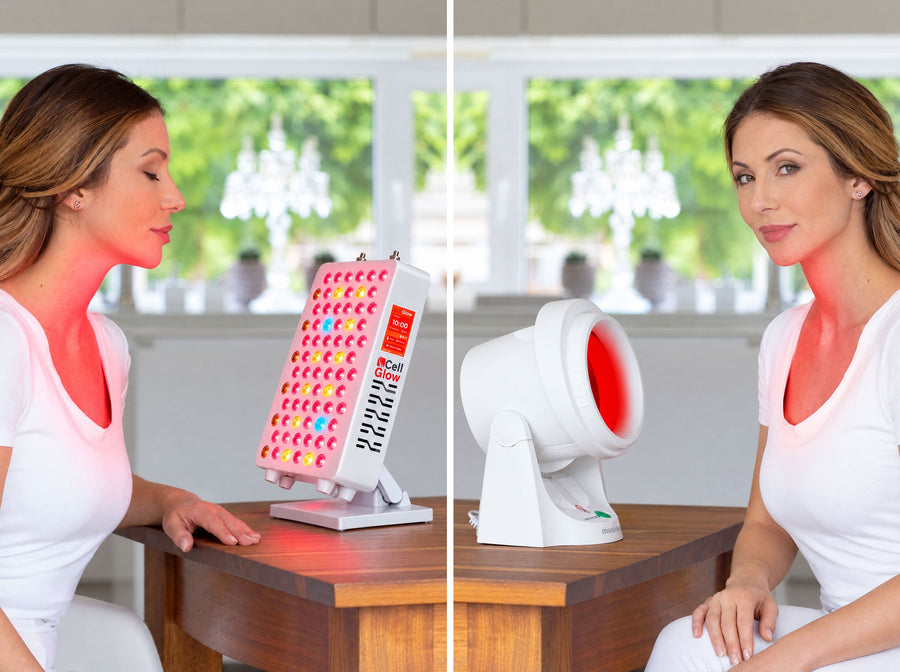
Does RLT work better with TENS or EMS? There is no convincing evidence for that. These are distinct methods: a Cell Glow panel delivers red and near-infrared light to skin and body areas; TENS supplies electrical pulses for short-term pain relief; EMS contracts muscles. They may be used separately, but faster recovery from their combination has not been established.
Which method fits which goal?
Choose RLT for a flexible, calm light session where heating is not the aim. Local photobiomodulation has clinical support for selected uses, depending on condition and dose. TENS can reduce pain during or shortly after stimulation; a large meta-analysis found an average benefit at those times. EMS has a role in targeted muscle activation and rehabilitation but does not replace exercise therapy.
How can you combine them?
Treat each as a separate function. Follow the device manuals and electrode-placement instructions. Seek professional advice before electrical stimulation with a pacemaker or other contraindication; do not place electrodes on the head or front of the neck. Have persistent or unexplained pain assessed.
Cell Glow panels are the logical starting point if RLT is your priority: illuminate different areas, adjust red and NIR light and choose the panel size you need. Add TENS or EMS only if you have a separate reason for them; the combination itself is not a proven advantage.
Source: TENS meta-analysis (2022).