Which lens angle fits you? Choose 30° to target a smaller area at a set distance. Choose 60° for easier coverage of a larger area. Lens angle describes how light spreads in air; 30° does not automatically mean deeper penetration into the body.
What happens to the beam?
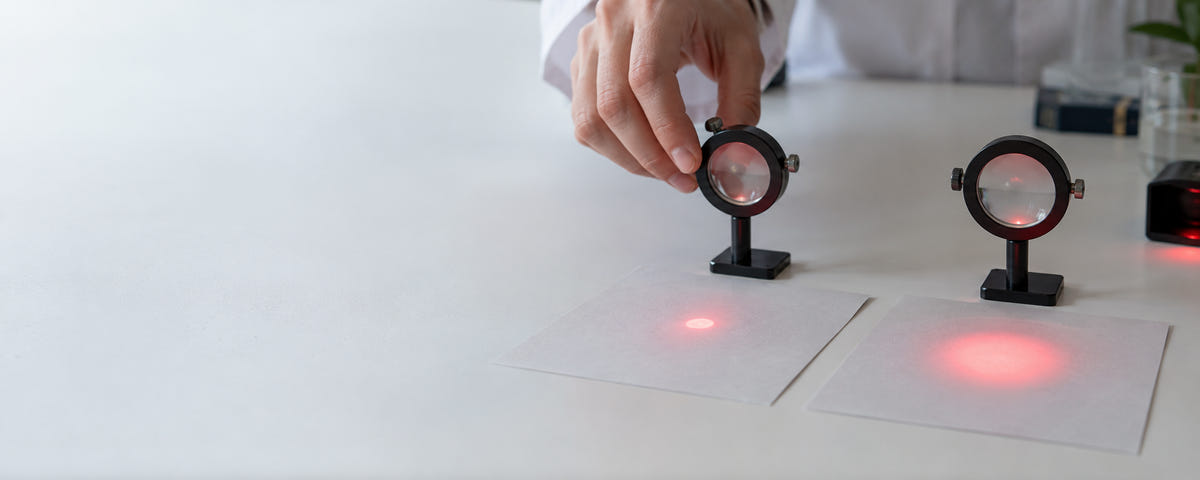
A narrow angle concentrates light in a smaller spot. A wide angle spreads it over a larger area. Actual irradiance on your skin also depends on distance, LEDs and optics. A measurement at your use distance tells you more than the angle on its own.
What about tissue depth?
Depth depends on wavelength, absorption and scattering in tissue, as well as how much light reaches the skin. A light transport model shows beam width can matter, but does not prove that a 30° lens universally treats deep tissue. A narrow lens does not guarantee better outcomes for muscles or joints.
Choose with Cell Glow
- Focused area and fixed position: consider 30° to concentrate the beam.
- Larger body area or easier movement: consider 60° for broader coverage.
- Unsure? Compare size, measurement distance and settings of Cell Glow panels. We can help find a setup you will actually use.
For a good RLT routine, repeatable distance and suitable coverage matter more than a claim that one angle treats every condition more deeply.
Source: Ash et al., light-penetration model.